

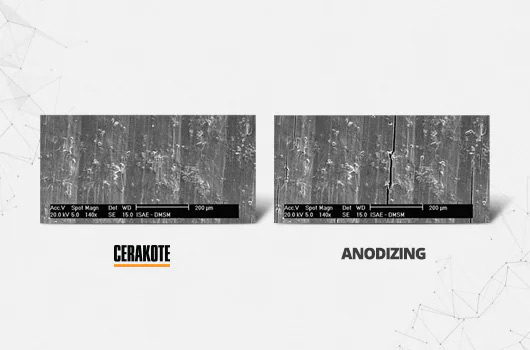
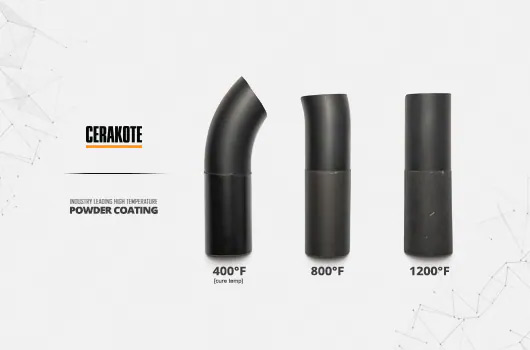

Cerakote is a performance coating known for its high-quality look, feel, and durability. Our inorganic formulations allow for maximum durability, excellent UV stability, extreme chemical resistance, and consistency across multiple substrates. We work with our customers around the world on customized solutions to solve industry problems and help them provide new marketable products…

Archery is an industry that extracts every foot per second of speed possible, where even a slight vibration of the hand can make a difference, and weight reduction is gold. You want a finish that is as tough as your hunt. A finish that will last through the harshest elements of the backcountry, as well as rigorous use on the range.

Luxurious color and a striking finish that never fades.
At Cerakote, we believe beautiful, luxurious finishes shouldn’t involve complicated applications. Other industry coatings are costly, potentially dangerous, and often provide hit or miss results. That’s why our ceramic based coatings can be easily applied using equipment your factory probably already has

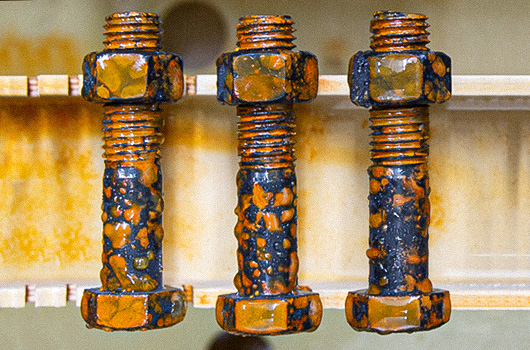
Unmatched Corrosion Protection..
Regardless of what you’re looking for in your fitness equipment, Cerakote offers the premium performance finish you need for world-class corrosion protect, wear resistance, chemical resistance as well as limitless customization possibilities. Leading fitness equipment manufacturers across the world are choosing Cerakote to finish strong!

When performance, beauty, color and cost matter.
Cerakote is an ultra-durable ceramic finish ideal for kitchen and bath fixtures. It allows greater design potential without sacrificing performance. Cerakote’s broad range extends from bright whites to unique metallic finishes, making it possible for your fixtures to fit seamlessly into every design style.
Cerakote combines the performance qualities expected in a commercial setting with the look and feel of a bespoke hospitality design. It is impervious…

Additive manufacturing/3D printing is one of the fastest-growing manufacturing technologies for the automotive, aerospace, defense, and healthcare industries. 3D Printers all over the world are printing with different types of polymers to create new parts in shorter time frames and with cost reductions that would never have been achievable with traditional manufacturing methods.
As additive manufacturing continues to grow in different industries, companies must evaluate…

Looking to protect or restore your fishing gear? Cerakote’s line of professional coatings are the perfect solution for both manufactures and fishing enthusiasts alike. Common finishes found in the fishing industry continuously create issues both at the manufacturing level and in the field. Cerakote’s thin filmed ceramic polymer coatings provide lifetime performance all in a premium finish.
Professional anglers looking to extend the life of their fishing reels, rods, and gear can depend on Cerakote’s industry leading coatings for restoration projects or maintenance.

Cerakote is the global leader in the manufacturing of thin-film automotive ceramic coatings. More OEM, aftermarket, and custom shops choose Cerakote for its industry leading performance. Our coatings are used by some of the most notable brands in the automotive world.
What started as a quest to develop a high temperature coating turned into producing the highest quality ceramic based thin film automotive coatings in the world. Cerakote’s unique properties…

When shopping for mountain or road bicycles, many cyclists can agree that the overall weight of the bike is one of its more important purchasing attributes. Cerakote has a single coat paint application that yields a weight reduction of 80-100 grams (on average) when compared to powder coat or other paint-based coating applications.
Most road bikes, especially mountain bikes, are exposed to rugged wear and tear. Cerakote’s one-time finish application along with…

Tight tolerance parts such as threads and valves are generally left uncoated due to the tolerance limitations of thick paints, powder coatings and plasma spray. This leaves the most critical areas of your operation exposed and unprotect. Not only does Cerakote have the industries leading corrosion protections, it is applied the entire part (external and internal without the need for expensive masking), including the most difficult threads, valves, and impellers…